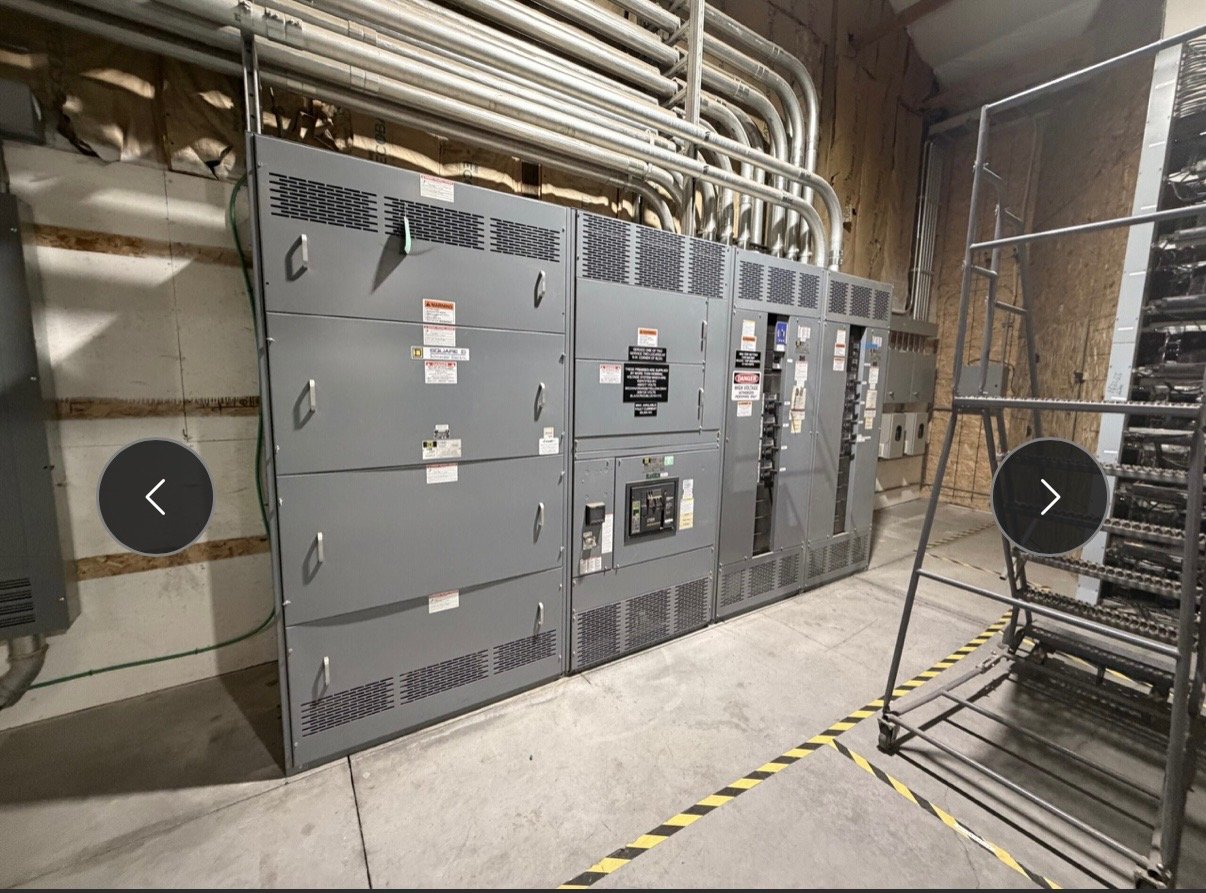
What the three positions mean
In the connected position, the breaker is fully engaged with the switchgear’s primary disconnects, allowing the intended power circuit to be made through the breaker when it is closed. Secondary control connections are also typically engaged, subject to the equipment design. Connected does not mean closed: the breaker’s open or closed state is separate from its position in the compartment, and the operating sequence must follow the equipment instructions.
At the test position, primary disconnects are separated while secondary control connections remain engaged in designs intended for electrical testing. This can permit checks of control functions, trip circuits, and breaker operation without connecting the main power path. In the disconnected position, primary and secondary connections are disengaged. Exact engagement points, indications, and permitted operations vary by design, so use the manufacturer’s drawings and operating documentation rather than assuming every breaker uses identical definitions.
Position indication and interlocks
A specification should identify how operators determine position: mechanical indicators, defined racking stops, and any electrical position contacts or remote status points required by the control scheme. Clarify which indications are local and which are sent to a monitoring or control system. If remote signals are needed, provide the preferred contact logic, terminal requirements, and any interface constraints so the configuration can be reviewed before release.
Interlocks help prevent unintended movement or operation, but their scope is equipment-specific. Describe required restrictions for racking, closing, and access to compartments, including any key interlocks or external permissives in the project design. Do not treat an interlock as a substitute for isolation, lockout/tagout, verification of absence of voltage, or the procedures established by the employer and equipment documentation.
Shutters, test access, and maintenance
When a breaker is withdrawn, shutters may cover stationary primary contacts, depending on the assembly design. Ask how shutters operate, whether their position is indicated, and what provisions are intended for inspection or maintenance. The equipment layout should preserve the access and working space required by the project while keeping barriers, compartment boundaries, and service tasks aligned with the approved design.
Drawout construction can support inspection, testing, or replacement workflows by allowing a breaker to move between defined positions or be removed using the specified method. It does not make maintenance inherently safe or permit work on energized equipment. Qualified personnel must follow site-specific electrical safety procedures, the manufacturer’s instructions, and applicable requirements; equipment must be placed in the required condition and verified before work proceeds.
Engineering the breaker and compartment together
The breaker and its cubicle must be treated as a coordinated assembly. Provide the system voltage, continuous current, interrupting or short-circuit requirements, frequency, and available system information for engineering review. Identify the breaker type and frame, protection and trip requirements, control voltage, and any auxiliary contacts or communications interfaces. These details affect both the breaker selection and the compartment connections and control wiring.
Also confirm the number of breaker compartments, feeder or source function, cable entry and termination needs, bus arrangement, and space constraints. Existing equipment interfaces require particular care: share available drawings, nameplate data, and verified dimensions rather than relying on a similar model number. Engineering review must establish compatibility and applicable ratings; no generic position description can establish that a breaker fits or is suitable for a specific lineup.
Procurement details and Georgia delivery
For a quote, send the one-line diagram, equipment schedule, relevant control schematics, and project specifications, along with the quantities and required delivery location in Georgia. State whether the request is for a complete new assembly or a defined new breaker-and-compartment configuration. Note the required connected, test, and disconnected indications, interlocks, shutters, control accessories, and documentation so the proposed scope can be checked against the project needs.
Confirm the project schedule, receiving hours, unloading arrangements, site access restrictions, and whether shipment should go to a jobsite or another designated location. Nationwide shipping can support Georgia projects, while exact availability, configuration, and timeline are confirmed for each order. Identify who will review drawings and resolve technical questions, and establish the submittal and approval path before manufacturing proceeds.
Handoff before operation
A useful handoff includes approved drawings, breaker and compartment identification, terminal and control information, position-indication details, and the applicable operating and maintenance instructions. The installing contractor and project team should compare delivered equipment with the approved documents, resolve discrepancies through the responsible engineering and construction channels, and complete required inspections and commissioning checks before placing equipment in service.
Before requesting a configuration, gather the one-line diagram, breaker ratings, control requirements, compartment information, desired position signals, and Georgia delivery constraints. Ask the project engineer to confirm the intended operating sequence and maintenance approach, then submit those details for a coordinated new-equipment proposal. This makes the three-position arrangement, interfaces, and project handoff reviewable before the order is finalized.